Body Clock Battles: Circadian Rhythm Shifts and Their Role in International Tennis Performance
Jordan Schulz · Sep 23, 2026
Body Clock Battles: Circadian Rhythm Shifts and Their Role in International Tennis Performance
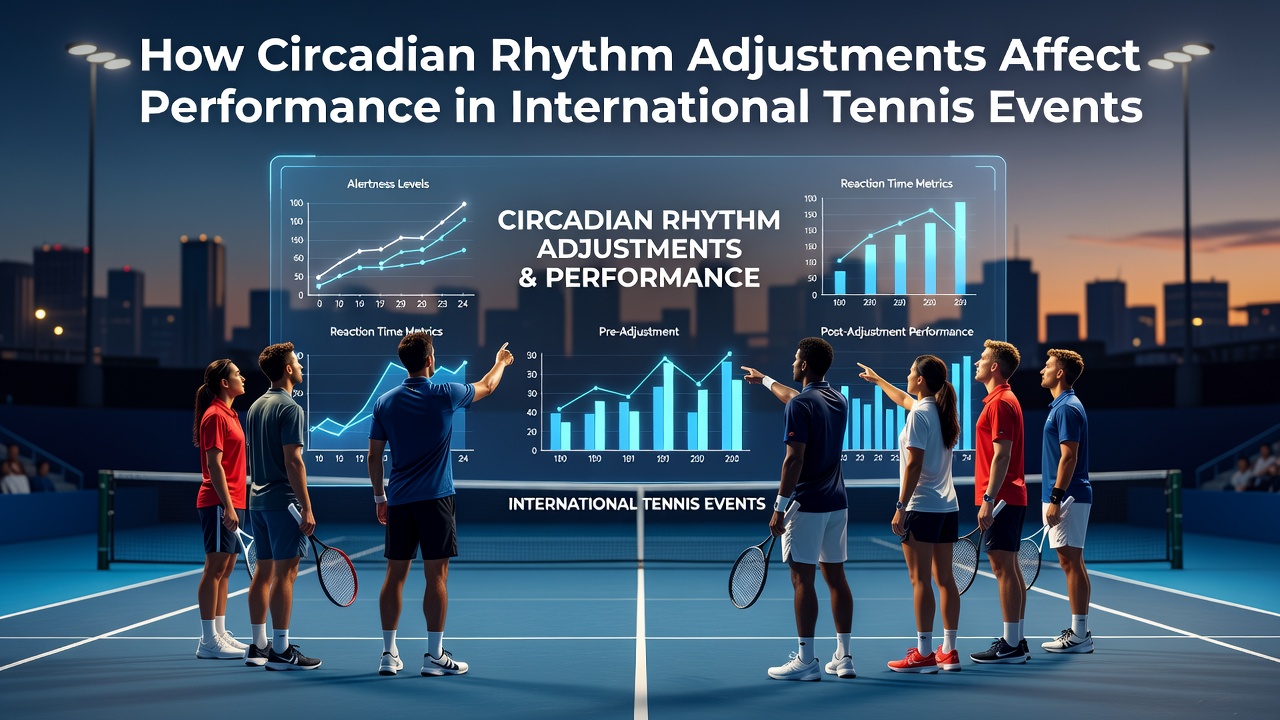
International tennis schedules force players to cross multiple time zones within days, and researchers have documented how these rapid shifts disrupt internal body clocks that regulate sleep, hormone release, and cognitive function. Data from sports science teams show measurable declines in reaction time and serve accuracy when athletes compete before full circadian realignment occurs. Observers note that events such as the Australian Open and the US Open draw competitors from every continent, creating a recurring pattern of jet-lag exposure that coincides with early-round matches.
Understanding Circadian Rhythms in Athletic Contexts
The human circadian system operates on an approximately twenty-four-hour cycle that governs core temperature, cortisol levels, and melatonin production, and studies conducted by exercise physiologists demonstrate that even small phase shifts alter peak performance windows. When players travel eastward, the body clock must advance, whereas westward travel requires a delay, and evidence indicates eastward shifts prove more difficult to accommodate within short recovery periods. Tennis demands sustained attention across rallies that can last several hours, so any misalignment between scheduled match times and an athlete's optimal alertness window becomes statistically relevant.
Travel Patterns and Performance Metrics
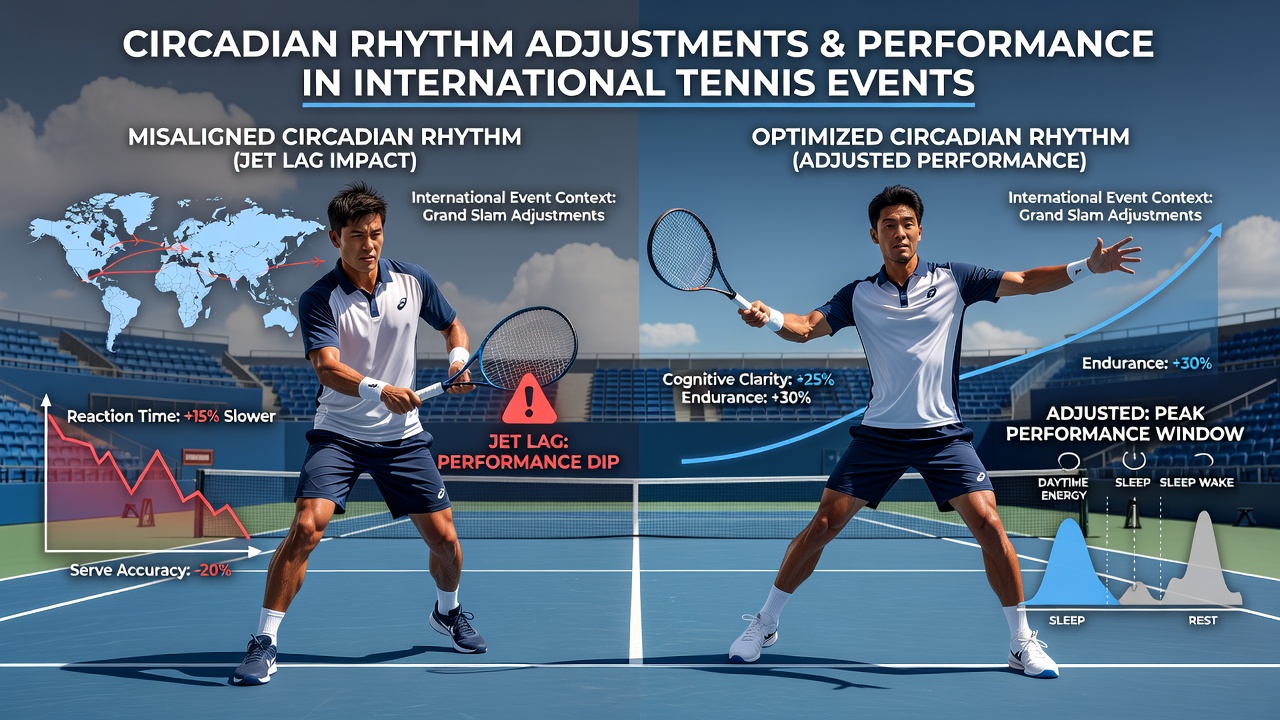
Grand Slam calendars place teh Australian Open in mid-January and the US Open in late August, and longitudinal tracking by performance analysts reveals that players arriving from Europe experience average sleep reductions of ninety minutes per night during the first three days after arrival. Reaction-time testing conducted courtside shows drops of up to twelve percent in first-serve percentage during those initial matches, while ground-stroke consistency metrics collected via Hawk-Eye data reflect similar temporary deficits. Westward travelers from Asia to New York for the US Open encounter a different adjustment curve, yet the overall pattern remains that incomplete adaptation correlates with measurable changes in point-win percentages on serve.
September 2026 Tournament Implications
The Davis Cup Finals scheduled for September 2026 in a European host city will again require teams from Australia, South America, and North America to cross several time zones within a compressed preparation window, and tournament organizers have already published arrival guidelines that recommend structured light-exposure protocols. Data collected during previous editions indicate that teams arriving more than five days early recorded fewer unforced errors in night-session matches compared with squads arriving within seventy-two hours. Researchers continue to examine whether targeted melatonin timing and controlled light exposure can accelerate phase shifts without violating anti-doping regulations.
Player Strategies and Recovery Protocols
Coaching staffs now integrate chronobiology specialists who prescribe individualized light schedules and meal timing to nudge circadian phase before competition begins, and several national federations publish anonymized summaries showing reduced injury reports when these protocols receive consistent adherence. Professional players have adopted wearable devices that track sleep architecture and core-temperature rhythms, allowing support teams to adjust training intensity on days when alertness metrics remain below baseline. One documented approach involves advancing or delaying bedtime by ninety minutes each day in the week preceding departure, a method that aligns with laboratory findings on gradual phase adjustment.
Statistical Evidence Across Tours
ATP and WTA performance databases contain thousands of match records that analysts have cross-referenced with travel logs, and regression models consistently identify a small but statistically significant performance decrement for players whose biological night coincides with scheduled match times. Afternoon sessions in Melbourne frequently align with the post-lunch dip observed in European and North American athletes, while evening sessions in New York can coincide with elevated melatonin onset for competitors still adjusting from Asian time zones. These patterns appear across both singles and doubles draws, though doubles teams sometimes mitigate effects through partner rotation that allows staggered recovery.
Future Research Directions
Academic groups affiliated with sports medicine departments continue to investigate whether genetic variations in clock-gene expression influence individual susceptibility to jet-lag effects, and preliminary findings suggest certain polymorphisms may predict faster adaptation rates. Tournament calendars for 2027 and beyond are under review by scheduling committees seeking to minimize consecutive long-haul flights between consecutive events. Continued collection of biometric and match data will clarify whether emerging recovery technologies can further narrow the performance gap created by circadian misalignment.
Conclusion
International tennis circuits create unavoidable circadian challenges that manifest in measurable shifts in serve percentages, reaction times, and error rates during the initial days after long-distance travel. Evidence from performance databases and physiological monitoring programs shows that structured adjustment protocols can reduce but not eliminate these effects. As calendars evolve and data collection expands, players, coaches, and tournament organizers will continue to refine approaches that align competition schedules more closely with individual body-clock requirements.